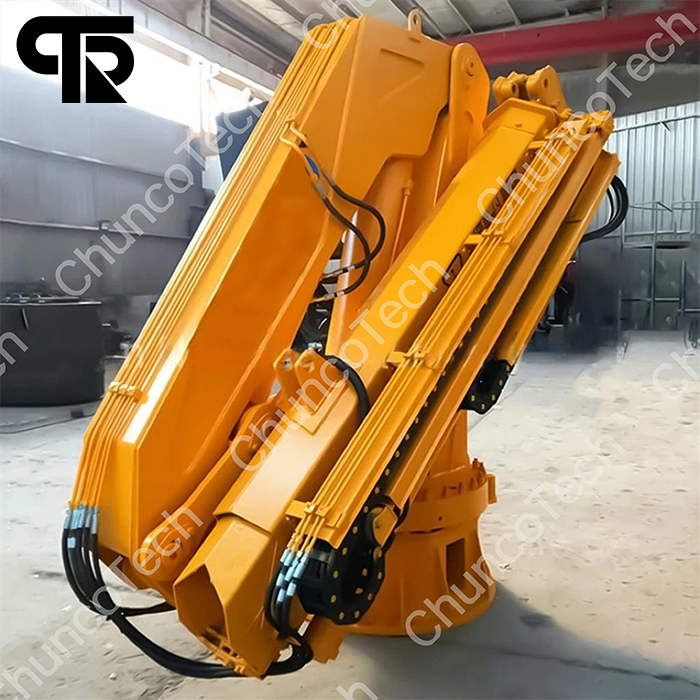
Choosing among a hoisting apparatus, the determination often concerns jointed crane versus direct arm. Linear arms supply plainness and are appropriate for vertical lifts, but foldable booms afford enhanced maneuverability, granting access to confined spaces. Consider the construction area; if you’re predominantly facing hindrances or need more complicated positioning, a segment crane is predictably the preferable option. However, for clear areas and elementary lifts, a fixed arm might result in a more cost-effective alternative.
Knowing Resilient Craning Arm Cranes: Uses and Gains
Robust lifting arm lifters represent a exclusive type of uphoisting equipment, developed for hefty load handling in demanding locations. Their main trait is a firm arm build, which permits for exact positioning and improved steadiness, especially when functioning in limited spaces or at large heights. Common purposes encompass bridge building, manufacturing projects, wind zone establishment, and municipal evolution. The essential profits comprise increased security, enhanced competence, and the means to perform tasks that can be unfeasible with typical cranes. This reflects to diminished outlays and better mission returns.
Ship-to-Shore Gantry: The Giants of Quay Container Operations
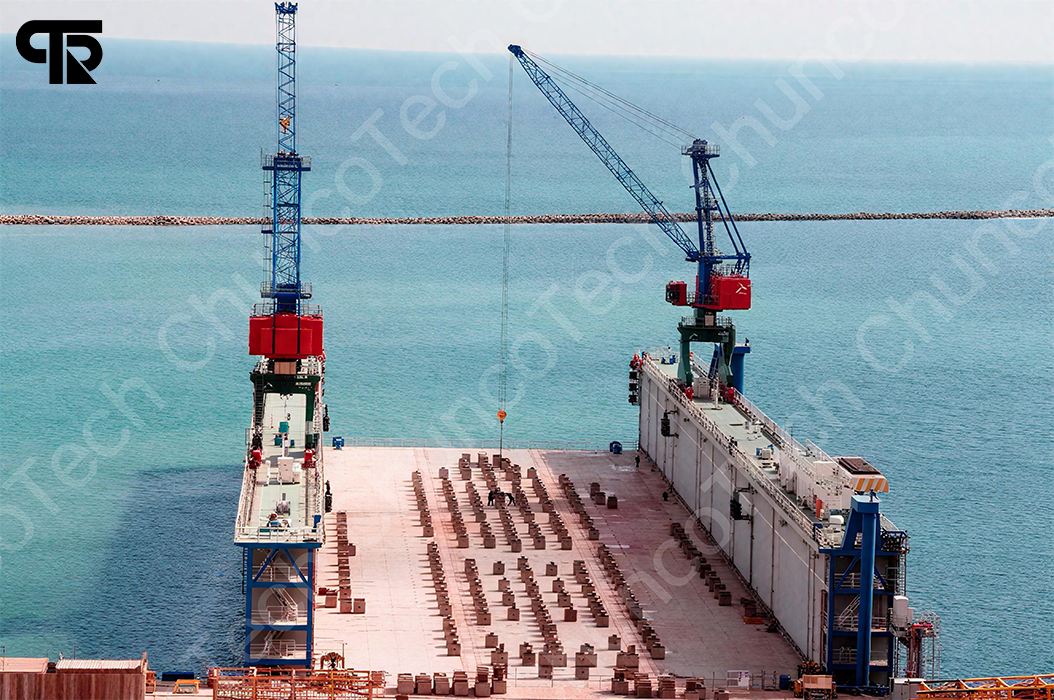
Modern enormous STS cranes represent the crowning point of engineering realization in the container industry. Designed to competently load and handle containers between carriers and the dock, they are critical for the seamless operation of modern ports. Their magnitude – often exceeding a ton meters – and phenomenal load ability allow them to handle the most substantial container liners currently in function, fundamentally influencing global industry.
Knuckle Boom Cranes: Variability in Hoisting Endeavors
Knuckle boom loaders are famous for their exceptional versatility, providing machinists with a distinct advantage in extensive raising chores. Possessing a curving boom part, these mighty devices can stretch around obstructions and arrange objects in compact areas. This power makes them perfect for employments in construction, shipping, infrastructure tasks, and abundant other fields. In summary, knuckle boom machines offer a crucial method to difficult transporting requirements.
Straight Boom Cranes: Correctness and Constancy Described
Fixed lifting boom machines are famous for their superior ability to deliver correct lifting and allocation of weights. As opposed to bendable models, their easy design leads to fundamental robustness, making them befitting for tasks requiring considerable magnitudes of direction and minimal movement. This quality is markedly significant in construction sites and sectors where stringent tolerances are mandatory.
Tough Hoisting Crane Advantages: If Strength Becomes Vital
Routine lifting boom lifters often face challenges with flex, especially when lifting large weights or running at important spans. Conversely, strong lifting boom installations afford a decisive perk by curtailing unnecessary movement. This improved stability translates to safer performances, raised carefulness, and a mitigated danger of item imbalance. Accordingly, firm systems are perfect for works where physical security is critical.
Dockside Cranes: An Thorough Examination into STS Engineering
This quay-side crane infrastructure represents certain key component within modern shipping terminals. Advanced ship-to-shore handlers are advanced structures assembled to rapidly offload boxes removed from colossal seagoing ships by ground networks. Its execution includes skill making and sophisticated systems to ensure welfare and improve throughput.
Measuring Crane Styles: Jointed, Straight, Strong, and Quay
Going for the best lifting device for a special use is paramount. While many selections exist, four common categories – articulating cranes, linear cranes, fixed cranes, and jetty cranes – showcase significantly diverse abilities. Variflex cranes grant extra maneuverability due to their jointed piece, making them appropriate for compressed zones. Fixed cranes offer multiuse extension through their movable boom, ideal for common material handling expectations. Luffing cranes preserve a raised section, commendable for accurate arrangements where constancy is critical. Finally, Harbor cranes, specialized for box carrying at jettys, include substantial elevating power and extended coverage.
- Knuckle Hoisting Forms
- Fixed Crane Kinds
- Heavy-Duty Machine Types
- Quay Loader Categories
Distinct Progression About STS Cranes: Shifts and Progress
Over recent decades, STS (Ship-to-Shore) crane design has undergone a notable development, caused by demands for greater port productivity. Early STS cranes were somewhat simple constructions, applying basic performing mechanisms. Now, contemporary STS cranes incorporate sophisticated robotics, including cutting-edge control systems, adaptive positioning functions, and augmented safety procedures. A key movement is the inclusion of electrically driven propulsion, diminishing effluents and upgrading operational endurance. Also, the rise of remote operation and data-driven maintenance are reshaping the landscape concerned with STS crane control. The vision sees sustained intensity on electricity saving and the building of even more powerful cranes to handle increasingly container crafts.
 Ship Unloaders