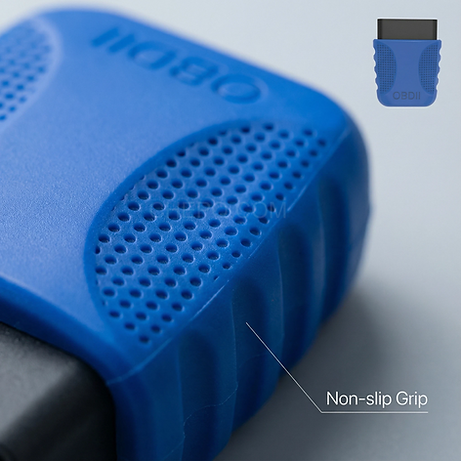
Comprehending OBD2 transmissions and tire alert device details fluctuate extensively across planetary locales. In the America, wheel sensing devices typically runs on 315 million hertz, while EU and Asian countries predominantly use the two point four GHz transmission range. vehicle data system systems, however, stay predominantly regulated across selected locations, employing particular information for motor vehicle examination, although regional differences in presenting techniques are able to happen. Because of this, correct determination often entails cognizance of specific zone practical details.
Vehicle Diagnostic Tools: Breaking Down Automotive Diagnostics in addition to Tire Condition Monitor Reports
Cutting-edge electric motorized transportation means deliver exclusive complications for inspection, and plug-in vehicle devices are required for interpreting valuable information. These advanced tools stretch beyond the traditional OBD2 link to uncover info regarding the battery management system, motor performance, and pertaining units. Additionally, they interpret TPMS (Tire Pressure Monitoring System) data, diagnosing defects like losses and malfunctions that modify reliability. Having the potential to explain this convoluted progression of metrics is necessary for efficient EV repair and confirming best performance.
TPMS Sensor Frequencies: Cross-continental Sensor Frequencies – Fundamental Points
Grasping various TPMS instrument signals is key for correct tire monitoring, particularly when procuring replacement components. North USA predominantly utilizes 315 MHz transmissions, although Europe ordinarily operates on 433 MHz. Such separation implies that a TPMS gadget crafted for one place cannot function correctly in different place. Take into account specified contrasts when choosing replacement TPMS devices to eliminate function difficulties.
- Northern States - 315 MHz
- Eurozone - 433 MHz
Understanding OBD2 & TPMS in Electric Vehicles: A Regional Breakdown
The progressing state of electric vehicles (EVs) supplies unique issues and considerations regarding On-Board Diagnostics II (OBD2) and Tire Pressure Monitoring Systems (TPMS). Within different jurisdictions, regulations and implementation change significantly, impacting fixing procedures and the obtainment of diagnostic tools. In North America, OBD2 requirements are relatively comprehensive, dictating a standardized data reporting system, although the specific parameters observed can fluctuate slightly by manufacturer. European regulations, ev service scanner guided by the ELSA (Enhanced Leakage and Safety Assessment) standard, place a strong emphasis on TPMS functionality, often requiring individual tire pressure monitoring and alerts. Asia-Pacific regions, such as China and Japan, demonstrate a assorted approach; China's regulations are developing towards increasingly stringent, particularly around vehicle safety and emissions data, while Japan maintains its own particular requirements for both OBD2 and TPMS. Consequently, specialists must possess field-related knowledge to accurately diagnose and resolve issues. Remember these key differences:
- North America: Emphasis on OBD2 fault codes and reporting.
- Europe: Stringent TPMS requirements for driver safety.
- Asia-Pacific: Regionally varying standards and evolving regulations.
Cross-border TPMS Compatibility: Europe, Asia, US Frequency Differences
Achieving universal tire sensor systems integration amid multinational marketplace poses significant obstacle due to diverse radio-frequency spectrums. Uniquely, Europe utilize a frequency of 433.92 MHz, whereas Asian markets commonly run on 315 MHz. American sector habitually put to use 315 MHz, nonetheless specific inconspicuous divergences are likely to manifest influenced by particular builder along with motor vehicle version. As a result, one must vital to establish broadcast range congruence in advance of placement to avoid faults along with confirm optimal device output.
Vehicle Device for Electric Cars: Tire Monitoring Diagnostics Throughout Various Territories
As electric auto adoption grows, the role of OBD2 inspectors is advancing to support TPMS diagnostics. This is unequivocally essential given that TPMS regulations and tire requirements alter significantly within multiple districts. For sample, the European Union mandates direct TPMS, requiring a detector to obtain sensor data and perform diagnostics, conversely North America uses indirect TPMS, in which the OBD2 port receives speed and wheel rotation data. As a result, a comprehensive OBD2 reader for EVs must furnish adaptability with both direct and indirect TPMS platforms and manage the specific diagnostic processes needed by distinct country’s regulations.
- Detailed TPMS Assessments
- Secondary TPMS Investigation
- Provincial Rules Obedience
Breaking down Tire Inflation Monitors Transmission Divergences in European Region, Asian Markets and the America
Addressing tire pressure monitoring systems radio signals globally needs recognition of area-specific disparities. Albeit the basic notion remains the equivalent, particular sending wave lengths vary substantially across principal spheres. In the United States, largely installations operate on 315 MHz or 433.92 MHz, even though Eurozone installations commonly use 433.92 MHz. In Far East, a large selection of radio waves are used, including 315 MHz, 433.92 MHz, and periodically 300-340 MHz, bringing about anticipated conflicts with several road-going vehicles unless correct tuning and review pertaining to geographic guidelines.
- Extended probe into specific radio waves can be suggested.
- Often confirm area standards pertaining to pressure sensor performance.
Electric Vehicle Servicing: Surveying OBD2 and TPMS Frequency Standards
As electronically driven motor vehicles become continuously prevalent, grasping their distinct service needs is vital. A key aspect embraces the behavior of the On-Board Diagnostics II (OBD2) structure and the Tire Pressure Monitoring Apparatus (TPMS). OBD2 guidelines typically depend on a consistent frequency, yet TPMS rates alter substantially based on producer and area. As a result, sound determination and adjustment of these components needs familiarity of the appropriate engineering attributes. What's more, progressing rules around radiowave frequencies are likely to impact TPMS performance over time.
Operator’s Guide to Tire Monitoring Systems Unit Frequencies: North American Markets, European Union, Asian Continent
Perceiving Tire Sensor Units sensor waves might seem fundamental for reliable assessment and exchange actions. Among North America, numerous cars function by such as 315 megahertz frequency or 433 megacycles. Across Different European Union, the default signal stands at 433 radio frequency unit, despite particular modern variants may besides accommodate 315 cycles per second. Asian Markets shows a notably more eclectic panorama, comprising both 315 megacycles and 433 million cycles systems widespread, subject to the manufacturer and automobile genre. Because of this, be sure to the precise transmission range before acquiring a spare instrument.
