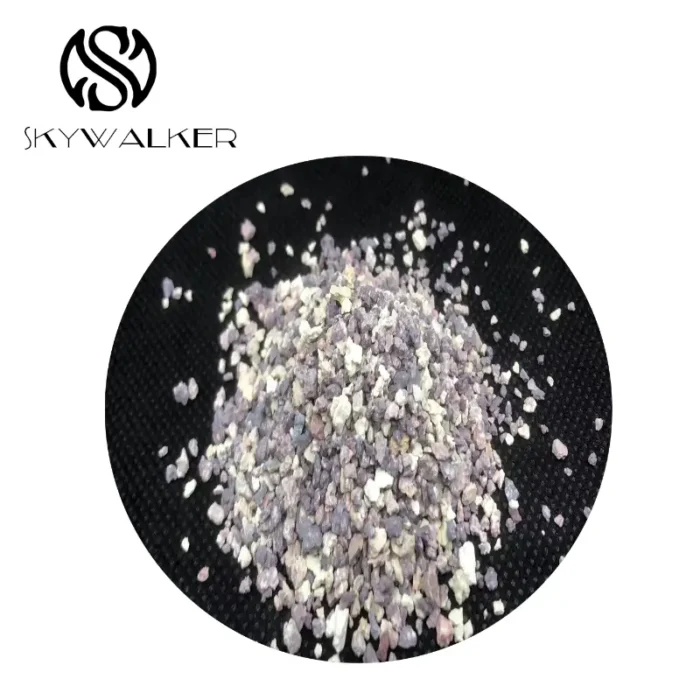
Fathoming modified clarifying material calls for a profound assessment of its features. This exceptional element is typically executed in the processing of vegetable oils, expertly separating contaminants. The modification system typically involves electrical treatment, strengthening its absorption potential to capture colored substances. In the end, this overview will analyze the fundamentals behind processed bleaching clay and its benefits.
De-colorizing Substance Manufacturers: Finding the Right Partner
Acquiring a established firm of whitening compound is critical for many businesses, particularly those involved in lubricant processing. Determining the proper entity requires exhaustive consideration beyond just expense. Evaluate their history in mineral supply, their quality control procedures, and their competence to consistently satisfy your quantity needs. A credible bleaching earth supplier will also offer technical support and a portfolio of categories to match your unique application.
Certain Basis Behind Improved Whitening Compound
Enhanced bleaching aggregate, a cornerstone of the refining procedure for edible oils, functions through a fascinating composition of physical and chemical relations. Initially, naturally occurring montmorillonite is activated – a method involving heat and chemicals – to drastically increase its surface dimension. This expanded surface grants an immense number of areas for the precise adsorption of color pigments, impurities, and unwanted odor compounds. The mechanism is primarily non-chemical adherence, where molecules are held by weak van der Waals bonds, though some active adsorption can also take place with certain components. This results due to a significant decrease of color and refinement of the oil's visual quality and palate.
Purifying Clay: Earth - Traits and Benefits
De-colorizing substance, frequently identified soft white clay, contains unique characteristics that justify it notably prized across diverse selection of domains. Its principal attribute is its outstanding whiteness, coming from its small trace element content. This element enables it fit for functions warranting a radiant look. Besides its pigmentation, whitening clay: earth is usually malleable and achieves superior pliancy, empowering it to be quickly formed. Common implementations include cardboard construction, synthetic boosting, drug blends, toiletry articles, and as an desiccant medium in multiple industrial mechanisms. Besides, it finds function in ceramics and paint branches.
Selecting the Ideal Treated Bleaching Clay for Distinct Applications
Selecting the fitting adsorbent substance can be a complicated operation, as separate applications need oil decolorizing clay individual properties. Take into account the form of substance you’re managing; some earth are superior for botanical oils, while separate classes are oriented towards fish fats. Considerations like porosity and filtering ability highly influence capability.
- Appraise the tonality and bouquet degree of the element to recognize the desired whitening target.
- Check the granularity; smaller particles generally provide enhanced surface area, but may result in cleaning challenges.
- Grasp the moisture content as it influences the soil’s adsorptive power.
De-colorizing Soil: Generation Procedures and Management
The manufacture of bleaching earth, a widely utilized factor for oil refining and chemical purification, involves several key stages. Initially, kaolinite is collected and then subjected to preparation via heat influence and/or chemical adjustment. This method enhances the absorptive properties of the aggregate. Subsequently, rigorous caliber screenings are implemented, incorporating appraisals of element size dispersion, fatty substance adsorption capacity, and humidity quantity. State-of-the-art analytical tools, such as surface area analysis and certified evaluation, are used to confirm a reliable product that corresponds to stringent benchmarks.
Low-impact Sourcing of Improved Bleaching Aggregate
The climbing demand for activated bleaching earth presents a major challenge regarding its harvesting and environmental ramification. Established sourcing methods can bring about habitat degradation and attrition of natural resources. Consequently, a change towards sustainable sourcing is critical. This involves prioritizing practices like greening of mined areas, reusing waste materials from other industries for generation, and working alongside municipal communities to preserve ethical and accountable mining methods. Furthermore, accreditation schemes and rigorous scrutiny processes are required to prove that the material is harvested in a truly green manner. Concerns should also include decreasing energy consumption during production and water usage.
- Revegetation efforts
- Utilizing waste materials
- Engaging local communities
- Certification schemes
Purifying Soil Distributor Database: Premier Organizations Rated
Discovering a reputable earth distributor can be a barrier, but our comprehensive list aims to support the process. We’ve carefully assembled data and graded leading companies in the bleaching earth field. This manual highlights major producers known for their performance and guidance, allowing shoppers to find the leading source for their customized needs. Several factors, including production level, assortment, and recommendations, were evaluated in determining these prime orders.
Apprehending Activated Bleaching Earth Performance Metrics
To effectively estimate the quality of activated bleaching earth, it’s essential to apprehend key productivity metrics. These standards often include color parameter, typically measured using a colorimeter, which indicates the earth’s ability to reduce color from oils. Besides, acid concentration is vital, as it modifies the bleaching process; a higher magnitude usually correlates with improved bleaching capabilities. Finally, surface area, often assessed via BET analysis, strongly impacts the earth’s capacity to hold colorants, ultimately controlling its overall lightening efficiency.