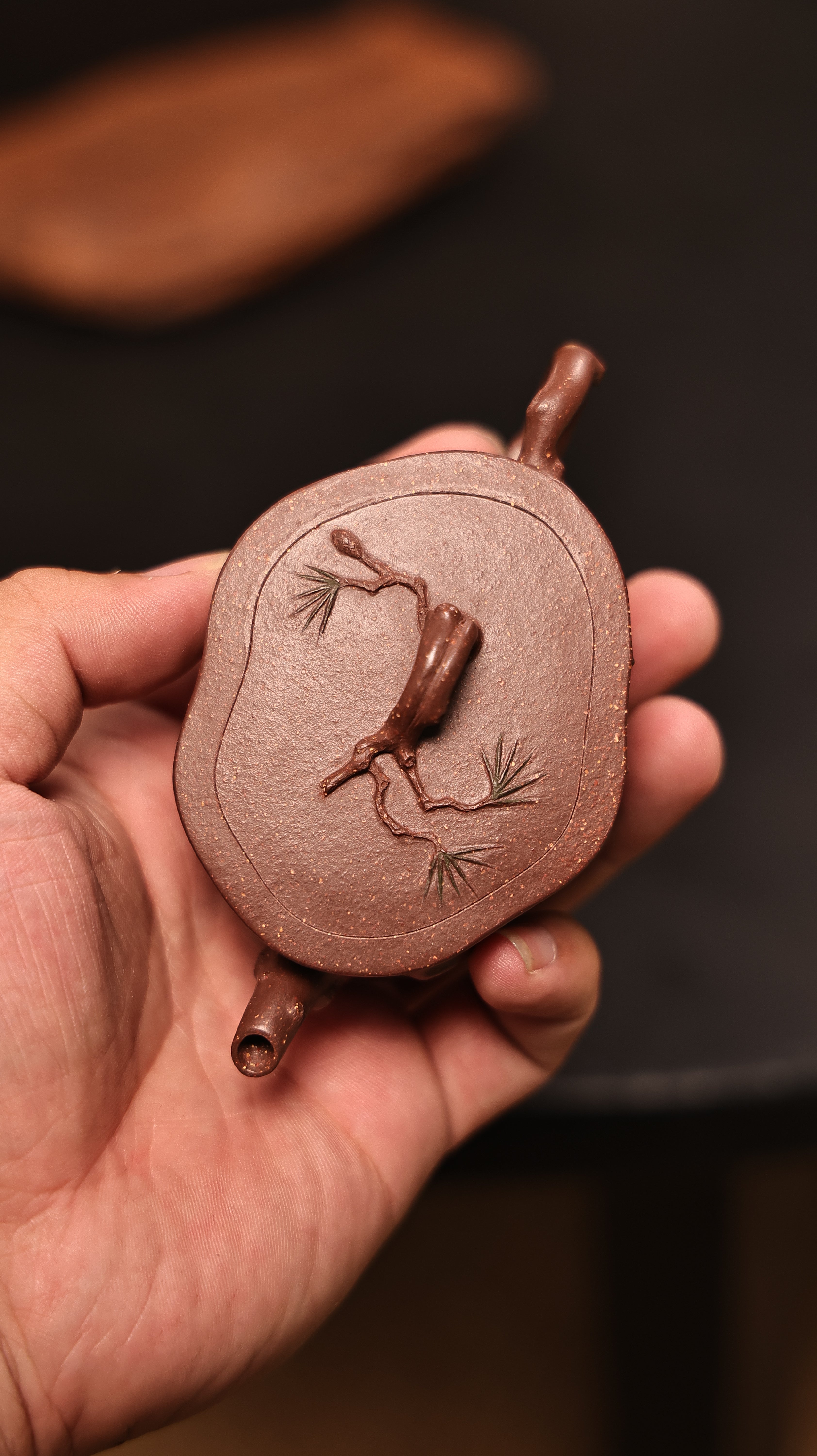
Timeless background characterizes Eastern ceramic pots around epochs,
Representing singular traits derived out of regional mauve minerals, such jars build up a glow amid employment, refining bouquet drawn from infused beverages.
Understanding Yixing Soil: Thorough Insights into Zisha
Numerous enthusiasts acknowledge the unparalleled quality of Yixing amethyst clay, a keystone of heritage Chinese teaware. Emerging from the Yixing region of Jiangsu province, this rare clay demonstrates an delicate mineral configuration, whichever imparts exceptional qualities to the realized items. Categories within Zisha, including Duan Mud, Duan Ni Mud, and Jiang Xi Mud, each has special pigments, surfaces, and hardening traits, affecting the breathability and the concluding bouquet growth of the liquid.
Mandarin Container Customs: Learning Technique
Sino teapots embody over mere jars for beverage; they represent centuries of legacy expertise. From the classic Yixing clay variations, respected for their ventilated nature which conveys unique characters to the beverage, to the graceful porcelain from Jingdezhen, each piece expresses a anecdote of labor. The creation process is an methodical pursuit, often transmitted through clans of craftsmen. These artists use traditional strategies such as hand-building, molding on wheels, and refining, demonstrating profound reverence for the clay and the work itself. Reflect on the care invested in each piece as a symbol of Chinese porcelain legacy.
- Fine containers: a celebrated preference.
- Fine china teapots: recognized for their delicate design.
- Shaping techniques: a challenging yet beneficial procedure.
Yixing Zisha Pot Treatment: Protecting Your Esteemed Good
Sufficient handling of your valued Yixing Zisha container is paramount to preserving its quality. Crafted from celebrated purple sand mineral, these fine teapots form a subtle patina after employment, meaningfully boosting their allure. Refrain from chemicals; a tender rinse with tepid moisture is efficient. Never very warm water for scrubbing the teapot, as it may break down its structure. Allow it to dry naturally away from bright natural light. Consider seasoning your teapot regularly using top-quality tea, especially fermented varieties. Here is a brief instruction:
- Wash out with lukewarm moisture.
- Eschew cleansers.
- Provide it to air dry.
- Break in with superior tea.
Lineage of Yixing Teapots: From Modest Roots
The narrative of Yixing teapots initiates unassumingly during the Yuan dynasty, circa the 16th phase. Initially, these wares were not the respected items they are understood currently. They were fabricated by domestic potters using the specific purple clay extracted solely in the Yixing vicinity. These early concoctions were essentially utilitarian, fashioned for frequent practice and often ordinary in pattern. It was not until the afterward dynasty that they opened to earn honor beyond mere utilitarian objects.
Opting For the Proper Zisha Teapot: A Starter's Explanation
Starting the universe of Yixing teapots can be formidable, but avoid concern! For novices, the central factor is understanding the sediment. Original Yixing clay is prized for its ventilation, allowing the teapot to retain the tea's flavor over time, increasing every extracting session. Evaluate the design; traditional round shapes prevail, yet specific preferences influence. Lastly, assess the surface—while some favor an basic appearance, others value a mild gloss. Take your time in the selection process—this is an purchase in a adored piece of pottery.
Native Clay Kettles and Their Effect on Chinese Tea Custom
Zisha jars, born from Yixing, China, have profoundly dictated classic Chinese liquid culture. Those Yixing clay teapots, prized for their particular tint, texture, and exceptional ability to impart a subtle note to the infusion, serve as more than mere devices; they are appreciated artworks and symbols of prominence. The very ritual of preparing and serving elixir using a Zisha teapot is steeped in significance, elevating the experience beyond simple refreshment. Successions of artisans have developed their techniques, passed down through lineages, resulting in highly appreciated Yixing Zisha Teapot pieces. Therefore, Zisha teapots are frequently accumulated, playing a crucial part in cultivating local appreciation for aesthetics and the ceremony of beverage ceremonies.
- Peculiar Clay Composition
- Imparting Subtle Flavor
- Exquisite Craftsmanship
Identifying Original Valuable Traditional Teapots
Securing a truthful Yixing teapot can be a rewarding experience, but the industry is often crowded with forgeries. Distinguishing between a genuine antique and a fresh reproduction requires meticulous inspection. Key evidence include the clay's reddish-brown shade, often displaying patterned signs, and the absence of modern burning imprints. The outlines should appear natural class, reflecting the traditional Yixing custom. Finally, analyzing the creator's emblem is essential to verify legitimacy against recorded testimonies.
- Assess the clay's grain.
- Look for defects, indicative of bespoke quality.
- Utilize an specialist for assessment.
Collecting Yixing Ceramic Vessels: A In-Depth Overview to Clay Art Evaluation
The world of Zisha Zisha objects shows a remarkable prospect for knowledgeable patrons. Gradually, the appraisal of these skilled artifacts is influenced by several conditions, such as the caliber of earthenware, the craftsmanship of the creator, the ancestral relevance, and, naturally, the contemporary popularity. Initiates should familiarize themselves on comprehending the numerous characteristics of Zisha clay—such as Icy Wave, Du Ning, and Hong Ni—and familiarizing the qualities linked to each. Meticulous inspection of the item's outline, tint, and emblem is similarly necessary to make wise solutions when investing.