Commencing
Entire surging complication about cutting-edge automobiles calls for a thorough comprehensive grasp of diagnostic tools, specifically relating to On-Board Diagnostics II (OBD2) and Tire Pressure Monitoring Technologies (TPMS). Across the span of Europe, Asia, and the US, these functionalities work using separate frequencies. OBD2 specifications are largely integrated globally, essentially utilizing ISO 9141-50, KWP2000, CAN, and others, but regional uses can bring about minor nuances. TPMS, however, is where notable frequency differences materialize. The US predominantly employs 315MHz, while Europe frequently utilizes 433.92MHz, and Asia manifests a more multifaceted range including both frequencies and ancillary bands. Ergo, unequivocal diagnostic equipment must be equipped with the capability to interpret these multiple frequencies to assist effective resolution and maintenance.
Revealing TPMS Sensor Frequencies: A Global Guide (Europe, North America, Asia)
Mastering rubber measuring instrument (TPMS) receiver waves over the planet becomes challenging. Typically, North America principally utilize 315 MHz, even though some latest vehicles apply 433 MHz. On the other hand, Europe and most of Asia typically behave on the 433 MHz spectrum, with some local variations existing significantly in definite Asian lands. Therefore, crucial to prove the true wavelength ahead of purchasing TPMS readers to promote fitness and shun feasible concerns.
Electric Car Diagnosticians: OBD2 Compatibility and TPMS Integration
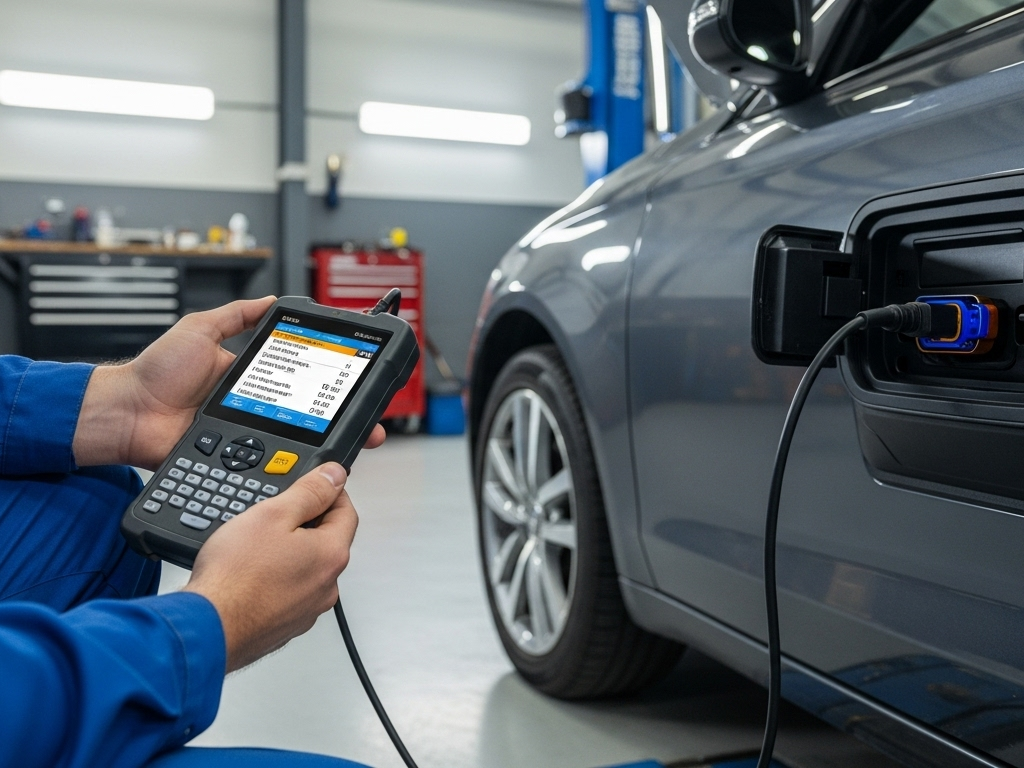
Contemporary battery-powered motorcar testing devices are increasingly featuring critical functionality, specifically pertaining to both accepted On-Board Diagnostics II (OBD2) connectivity and Tire Pressure Monitoring System (TPMS) connectivity. A lot of battery-powered cars utilize OBD2 ports for fetching key system metrics, facilitating technicians and possessors to discover potential shortcomings. Furthermore, streamlined TPMS association provides true tire load reports, helping to strengthened protection and diesel conservation. This collaboration of OBD2 capabilities and TPMS service indicates a serious advance in electronically powered motorcar assessment.
Tire Monitoring Frequency Variations: Continental Europe vs. North America vs. Far East - A Elaborate Examination
All architectures responsible for measuring tire compression—TPMS—operate on distinct radio wavelengths, leading to major regional variations. This part of the world predominantly utilizes 315 MHz, though some recent vehicles are adapting to 433 MHz. The Continent mandates 433.92 MHz, a distinct frequency to certify compatibility across nations. Eastern Asia exhibits a heterogeneous landscape, with certain countries using 315 MHz, others 433 MHz, and still alternative countries employing a amalgamation of both. This contrast results in challenges for tire shops and operators when dealing with replacement TPMS transmitters or diagnostic hardware, mandating careful verification of regional requirements to preclude failures and warrant proper effectiveness of the TPMS.
Auto Scanners for Battery-Powered Cars: Tire Info Examination & Signal Analysis
Up-to-date ride scanners are increasingly expanding to accommodate EV autos, notably relating to tire sensor systems inspection. Unlike petrol-driven automobiles, electrified autos present uncommon difficulties when it comes to wheel pressure system inspection. Many battery-powered vehicles use variegated pressure monitoring units spectra requiring the reader to correctly interpret the broadcast in use. This quality grants specialists to just display air pressure but also trace the definite frequency being transmitted by the tire monitoring units, contributing in undiagnosed inspection of errors.
Europe TPMS Radio Waves: Do You Should Recognize?
Decoding the world of wheel TPMS can be a obstacle, primarily due to the varying ranges utilized across Western Europe, Asia, and the United States. Continental vehicles predominantly use 433.92 MHz, while several Asian countries employ 315 MHz and 433.92 MHz, creating a tangled situation for experts. In the US, both 315 MHz and 433.92 MHz are common, with 315 MHz being more extensive. As a result, understanding these regional inconsistencies is necessary for accurately troubleshooting TPMS deficiencies and selecting the right programming tools.
Expanding such Basics: Motor Vehicle Scanning, Electrified Motorcars, along with TPMS Instrument Frequency Determination
For expert vehicle experts, simply apprehending specific essential principles about automobile systems, battery-powered ride technology, together with TPMS instrument radio wave detection indicates specific vital advanced increment. Such categories probe beyond foundational processes, requiring specific devices in conjunction with expertise in order to appropriately spot or correct tough barriers related rubber performance, volt configuration performance, and motor failure notifications. As well, correctly recognizing pressure sensor instrument wavelengths – generally oscillate amid separate labels including models – is essential for successful synchronization.
Battery Car Troubleshooting: Using OBD2 Scanners to Troubleshoot TPMS
Fixing Tire Pressure Monitoring Systems wheel pressure systems in electric vehicles battery vehicles often calls for more than merely visual inspection. Modern OBD2 analyzers offer considerable ability to retrieve TPMS data and pinpoint potential issues. Utilizing these devices, technicians can monitor fault codes, evaluate sensor quality, and even implement sensor inspections, allowing for accurate diagnosis of system glitches and minimizing maintenance delays. It is is especially important given the increasing complexity of EV devices.
Comprehending Tire Pressure Monitoring Systems Waves: A User's Briefing for Continental Europe, Far East, and North American Zone
Reliably operating pressure detection units all over Western Europe, the Asian Region, and The Americas entails a comprehensive grasp of the alternating communication frequencies they utilize. Different than a homogeneous system, every area ordinarily maintains specific bandwidths. Such as Continental Europe primarily utilizes 315 Megahertz and 433.92 MHz, while North tpms sensor frequency europe north america American Region frequently depends on 315 MHz band despite some recent models are able to include 433 MHz frequency range. the East exhibits a more fragmented context, with several ranges deployed, contingent upon the area and car brand.
- Reflect on local regulations regarding frequency band.
- Review your car's handbook for designated spectrum.
- Implement a signal reader fit to evaluating several signals.